
June 2026 Newsletter
I hope you’re enjoying the summer and are able to spend some time in the sun with friends and family.

To add to the fun, we’d love for you to join us at our client appreciation event on August 9th at 4:00 pm at the Crypto Arena to watch two great WNBA teams, the Sparks and the Golden State Valkyries, battle it out. No matter who wins, it should be a fantastic afternoon. 🏀 Email or call Rebekah to RSVP: rebekah@soaringinvestmentmanagement.com or 503-433-7946.
This quarter’s newsletter topics include a piece on financial data security (important!), investing in an expensive market, and our quarterly portfolio update. As always, I’d love to hear your thoughts or questions—and if there’s a topic you’d like to see covered in the future, just let me know.
You can reach me anytime at e.imley@soaringinvestmentmanagement.com or 424-772-1682. If you’d like to chat ‘face to face’ on Zoom or set up an in-person conversation, you can always schedule a time using my calendar link.
Best,
Eric
 Spotlight: Protecting Your Financial Data
Data security has been one of the biggest topics at nearly every professional conference I’ve attended this year—and for good reason. Advances in AI have made cybercriminals far more sophisticated than ever, giving them the tools to create convincing phishing emails, clone voices, generate fake video calls, and automate scams at a scale we’ve never seen before.
Perhaps even more concerning is that, more and more, today’s criminals are targeting people rather than technology. Instead of trying to hack secure systems, they are using AI to exploit trust, urgency, and emotion to trick people into sharing sensitive information or authorizing fraudulent transactions.
Rather than dwell on the risks, I thought it would be more helpful to share a few practical steps I’ve either taken myself or recommend to clients. While each step can take a little extra time, together they can go a long way toward protecting your personal information and saving you from the considerable time required to resolve even a partial identity-theft or financial fraud issue—as well as the incredible stress that goes hand-in-hand with these incidents. None of us can eliminate cyber risk entirely, but we can make ourselves much harder targets.
- Consider an identity-theft protection service.
While I was somewhat wary of these services in the past, I now think most people should at least consider one. Services such as LifeLock (available through AARP), Aura (available as a benefit to SCPMG partner physicians and their immediate families), and ProtectMyID (available through AAA) monitor for signs that your personal information may be misused. They can alert you to new credit accounts opened in your name, suspicious activity involving your Social Security number, changes to your credit report, or personal information appearing in data-breach or dark-web databases.Many of these services also provide hands-on assistance if your identity is compromised, helping with paperwork, credit freezes, fraud disputes, and restoring your accounts. They can’t prevent identity theft, but they may provide earlier warning and make the recovery process much less overwhelming. Pricing varies by provider and promotions, but comprehensive individual plans are often available for as little as $10–$25 per month—a small price to pay.
- Use strong, unique passwords and enable multi-factor authentication wherever possible.
I realize I’m joining a very large chorus here, but it’s advice worth repeating: use a different, long password for every important account. A password manager is usually the easiest way to do this without trying to memorize dozens of complex passwords. Multi-factor authentication adds another meaningful layer of protection, especially for financial institutions, email accounts, and any site that stores banking, tax, credit card, or other personal information.If you only tackle one account today, make it your primary email account. In many cases, email is the key that allows someone to reset passwords for nearly everything else.
- Use Apple Pay or Google Pay whenever possible.
Whenever a retailer or website accepts Apple Pay or Google Pay, I generally recommend using it instead of typing in your credit card number. These services typically use a secure token rather than transmitting your actual card number to the merchant. That means if a legitimate retailer later experiences a data breach, your underlying card information is much less likely to be exposed.Using these services won’t protect you from a fraudulent website or online scam, but they do provide an extra layer of protection when shopping online. I would also be especially cautious about giving any website direct access to a bank account.
- Take advantage of the security features your financial institutions already offer.
Many financial institutions, including Schwab, provide several layers of protection that can be tailored to your comfort level. These may include two-step verification for online access, verbal passwords for phone conversations, and additional safeguards around money transfers.At Soaring, our standard practice is to call you to confirm the details of any money-transfer request. Some clients also choose to add additional restrictions so that certain transfers require a conversation with me, Rebekah, Michael, or Lisa before money leaves the account. Our goal isn’t to make accessing your money more difficult—it’s to make it much harder for someone else to do so.
Schwab is a member of the Securities Investor Protection Corporation (SIPC). SIPC protection may apply if a SIPC-member brokerage firm fails and customer assets are missing, up to $500,000 per customer in each separate capacity, including up to $250,000 for cash. SIPC does not protect against investment losses, market declines, or ordinary changes in the value of your investments.
- When something feels urgent, slow down.
Nearly every successful scam relies on creating a sense of urgency. You receive an email saying your account has been compromised, a text asking you to verify your identity immediately, or even a phone call from someone who sounds exactly like a family member asking for help. Consider establishing a simple family code word that can be used to verify identity when requested money. And whenever money or sensitive information is involved, remember to pause before acting. Verify requests using a trusted phone number—not the one included in the email or text—and never let someone pressure you into making an immediate decision.
If all of this feels a little overwhelming, don’t worry. I complete cybersecurity training every year and am always happy to help you think through the options and decide which safeguards make the most sense for you. Sometimes a brief conversation is all it takes to put a good plan in place.
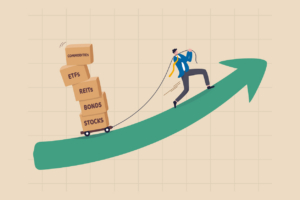 Staying the Course in an Expensive Market
As we settle into the second half of 2026, many of my recent client conversations have begun with the same observation: “The market feels expensive.” You’re not imagining it. Based on our internal valuation framework, the S&P 500 is currently trading roughly 35% above its long-term trend estimate.
When valuations are high and geopolitical headlines grow more dramatic, it’s natural to wonder whether the market is overdue for a correction—or whether “this time it’s different” somehow.
History offers valuable perspective and this important reminder: high valuations deserve attention, but they don’t tell us when markets will change direction. “This time it’s different” remains one of the most dangerous phrases in investing. Markets rarely move in straight lines, and periods when prices remain above their long-term trend are a normal, if nerve-wracking, part of the investing cycle.
Our valuation framework illustrates this well:
- During the late 1990s, the market appeared increasingly expensive, rising from roughly 16% above trend at the end of 1995 to more than 50% above trend by the end of 1999. Those valuations ultimately proved unsustainable, but an investor who exited the market simply because stocks looked expensive in 1995 would have missed several years of exceptional returns before the correction finally arrived.
- The same pattern appeared before the 2008 financial crisis. Valuations remained above trend from 2003 through 2007, but that alone didn’t tell us when the market would turn.
That’s why our response isn’t to make an all-or-nothing prediction. Instead, we focus on building portfolios that can participate in continued market growth while remaining diversified if leadership changes or volatility returns. Barcelona, our long-term portfolio, is designed with that philosophy in mind. We maintain broad exposure to U.S. equities but avoid becoming overly dependent on the largest and most expensive companies simply because they’ve recently performed well. Instead, we balance that exposure with ‘quality and moat’-oriented businesses (which I wrote about last quarter), small-cap value stocks, and international equities. Together, these investments give us exposure to different parts of the global economy and reduce our dependence on a relatively small group of mega-cap growth companies.
What I call the ‘sidecar’ also plays an important role in this environment. Short-term fixed income, gold, and other diversifying assets aren’t included because we expect a market decline every year. What they give us is flexibility; they can help meet cash needs without selling equities during periods of market stress and may provide capital that can be redeployed when attractive opportunities emerge.
At a very high level, our goal is to remain competitive with traditional benchmarks when markets are expensive and moving higher, while recognizing that diversification, risk management, and a measured reserve of more defensive assets may be especially helpful during more difficult market environments. We believe this structure can help us participate in the recoveries that have historically followed market downturns, while maintaining a more disciplined approach than simply owning more of whatever has recently gone up the most.
No one can consistently predict when markets will peak or when corrections will begin. I believe our disciplined investment process offers the best opportunity for long-term success.
This commentary is for informational purposes only and is not individualized investment advice or a recommendation to buy or sell any security. Our valuation framework is one analytical tool, not a timing signal, and its estimates are subject to change. Past performance, historical market patterns, and prior recoveries do not guarantee future results. All investing involves risk, including the possible loss of principal, and no strategy can eliminate risk, avoid losses, or guarantee better long-term results.
Portfolio Performance
The first half of 2026 has been relatively calm, with markets generally absorbing political developments and evolving interest-rate expectations without the sharper swings we saw over the past few quarters.
- Barcelona
So far this year, our long-term portfolio has performed in line with its benchmark (net of all fees). International stocks and small-cap value holdings have performed especially well this year. Gold has pulled back after exceptional gains of 64% in 2025 and 26% in 2024, and we gradually reduced that position as it appreciated. The remainder of our portfolio‘s investment ‘sleeves’ are up high-single-digit returns.Barcelona has kept its ‘sidecar’ money in gold, short-term momentum strategies, and high-quality bonds. This structure allows us to stay defensive when needed, while retaining the ability to reinvest quickly when opportunity knocks.
- Boise
Our fixed income portfolio has outperformed its benchmark year to date. One contributor has been PTNQ, an exchange-traded fund (ETF) that uses a disciplined trend-following with exposure to the Nasdaq-100. By participating in the index during favorable trends while shifting defensively when the Nasdaq-100 falls below its 200-day moving average, PTNQ has added meaningful return without making it the portfolio’s sole source of risk.Boise is built so that the bonds taking on a little more risk are generally shorter-term, which helps limit the damage if the economy weakens or lower-quality bonds fall out of favor. The longer-term portion is focused more on broad, higher-quality bond investments, giving the portfolio some stability and diversification without taking as much interest-rate risk as a traditional all-purpose bond fund.
As I’ve said many times before, short-term performance is interesting, but it’s long-term results that matter most. That’s where these models shine.
